GEEK HAUS
Back to feed
2026/06/05/microsofts-ai-futurist-explains-how-he-uses

Microsoft's AI Futurist explains how he uses Copilot — and the real-world problems enterprises are solving with agents

·VentureBeat
read original

EDITOR BRIEF

At Build 2026, Microsoft positioned enterprise AI agents as moving from experiments into production, unveiling Microsoft IQ, Work IQ APIs, Fabric IQ, Foundry IQ, Web IQ, Scout, and seven new MAI models. Marco Casalaina, Microsoft’s VP of Core AI and AI Futurist, discussed the company’s agent strategy, model-choice philosophy, and why enterprises need more than powerful models alone.

CONTEXT

Microsoft is framing the next phase of enterprise AI around trusted infrastructure rather than standalone chatbots. The emphasis on context layers and governed data access suggests competition will increasingly center on who can make agents reliable, compliant, and deeply integrated into daily workflows.

ARTICLE

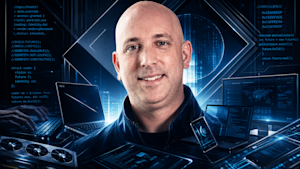
Microsoft used its Build 2026 conference this week to push a clear message: agents are rapidly moving into production throughout enterprise systems, and the winning platform will be the one that gives them reliable context, governance, identity, memory — and secure access to enterprise data. The company announced Microsoft IQ as a context layer across GitHub Copilot, Microsoft Foundry and Copilot Studio; Work IQ APIs coming June 16; Fabric IQ for structured business data; Foundry IQ for retrieval across enterprise knowledge and the live web; and Web IQ as a new agent-facing web search stack. Microsoft also introduced Scout, a personal work agent, and a whopping seven new in-house AI models in its growing MAI family across modalities and use cases, including MAI-Thinking-1.Those announcements sit directly in Marco Casalaina’s lane. Casalaina is Microsoft’s VP Products, Core AI and AI Futurist. He leads Microsoft’s AI Futures team and previously led teams across Azure AI, including Azure OpenAI, Vision, Speech, Decision, Language, Responsible AI and AI Studio. Before Microsoft, he led Salesforce’s Einstein AI team and earned a computer science degree from Cornell University. CRN reported that he joined Microsoft in early 2022 as vice president of products for Azure Cognitive Services, meaning he has now been at the company for more than four years.VentureBeat spoke with Casalaina ahead of Build about Microsoft’s agent strategy, the company’s model-choice philosophy, how Microsoft IQ fits with MCP, and why he believes enterprises need far more than just access to powerful models. The interview below has been edited for clarity and condensed from the transcript.VentureBeat (VB): To start, can you explain your role at Microsoft and what “AI Futurist” means in practice?Marco Casalaina (MC): I am VP Products of what we call Core AI. Core AI is our set of tools for AI developers, and that includes Foundry, Visual Studio, VS Code, GitHub and GitHub Copilot. That’s our overall group.My Silicon Valley title is AI Futurist, and that has a very concrete meaning here. I’ve worked with other folks who are considered futurists, like Peter Schwartz, and that can be a little bit more fuzzy. For me, what it means concretely is that I am the first person to try anything new here.I am constantly getting things from all over Microsoft, not even just Foundry, because I work with really everybody across the company. Pretty much everybody sends me the new things at all times. Even today, I got something brand new just before this call. I’m usually the first person to try anything new here, which is pretty cool. I get to see a lot of really cool stuff.A friend of mine, who is head of AI at Intuit, calls me an “adjacent possiblist.” I consider my futurist concept to be about a year out from now — the immediate future of what’s about to happen next. That’s what I focus on.VB: Where are you looking at the agentic state of things, and in particular Microsoft’s position as enterprises and individuals rush to adopt agentic AI?MC: We can look at it from bottom to top. At the very base of the stack is our commitment to model choice. All along, we’ve had the OpenAI GPT frontier models. Now we have a really solid partnership with Anthropic, where we’re offering the Claude models. We just launched Claude Opus 4.8 on Azure — on Foundry, I should say — and at Build, we are introducing our new MAI model.The MAI models are a set of frontier models that we’re building in-house. They are made for token efficiency, optimization and customization. We are specifically making them for our customers to customize on their own data sets.One level above that, we are announcing hosted agents in Foundry. That is our managed agent capability in Foundry. It automatically handles scaling, containerization and those kinds of things. It is an environment where you can manage agents.One level above that is the Foundry control plane. At least for the agents you build, you want to have control over them. This gives you observability into their cost, tokens and correctness. You can do continuous evaluations and sample interactions with those agents, run evals and make sure they are continuing to work and not drifting.The big news is going to be the GA of what we call the IQs here at Microsoft. There are currently three, and there will be four. There is Foundry IQ, which is basically for knowledge — largely unstructured knowledge. There is Fabric IQ. We have a ton of customers who have entrusted a lot of data to the Microsoft Cloud in Fabric, Power BI and related technologies. Fabric IQ is about making an agent-facing interface for this data, so agents can get to it without literally going through a Power BI report. That’s ridiculous.Work IQ is about the Microsoft ecosystem. You can look at Work IQ as the agentic face of all the Microsoft apps: Outlook, Teams, Word, SharePoint and all those kinds of things. How does an agent interact with those things? That is Work IQ.

COMMENTS

Discussion

> geekhaus:~$ next read?

Next read recommendations